Best Software for Electricians (2026): The Quote Is the Product
A homeowner wants a panel upgrade, so she calls three electricians. All three turn up, all three say much the same thing, and all three send an estimate that looks roughly like the other two. The one that gets signed is usually the one that arrived first, looked professional, and let her see her options. The job was won on paper before anyone picked up a tool. So compare electrician software on the quote: how good is it, and which plan is it on? The second half of that question costs more than you’d expect.
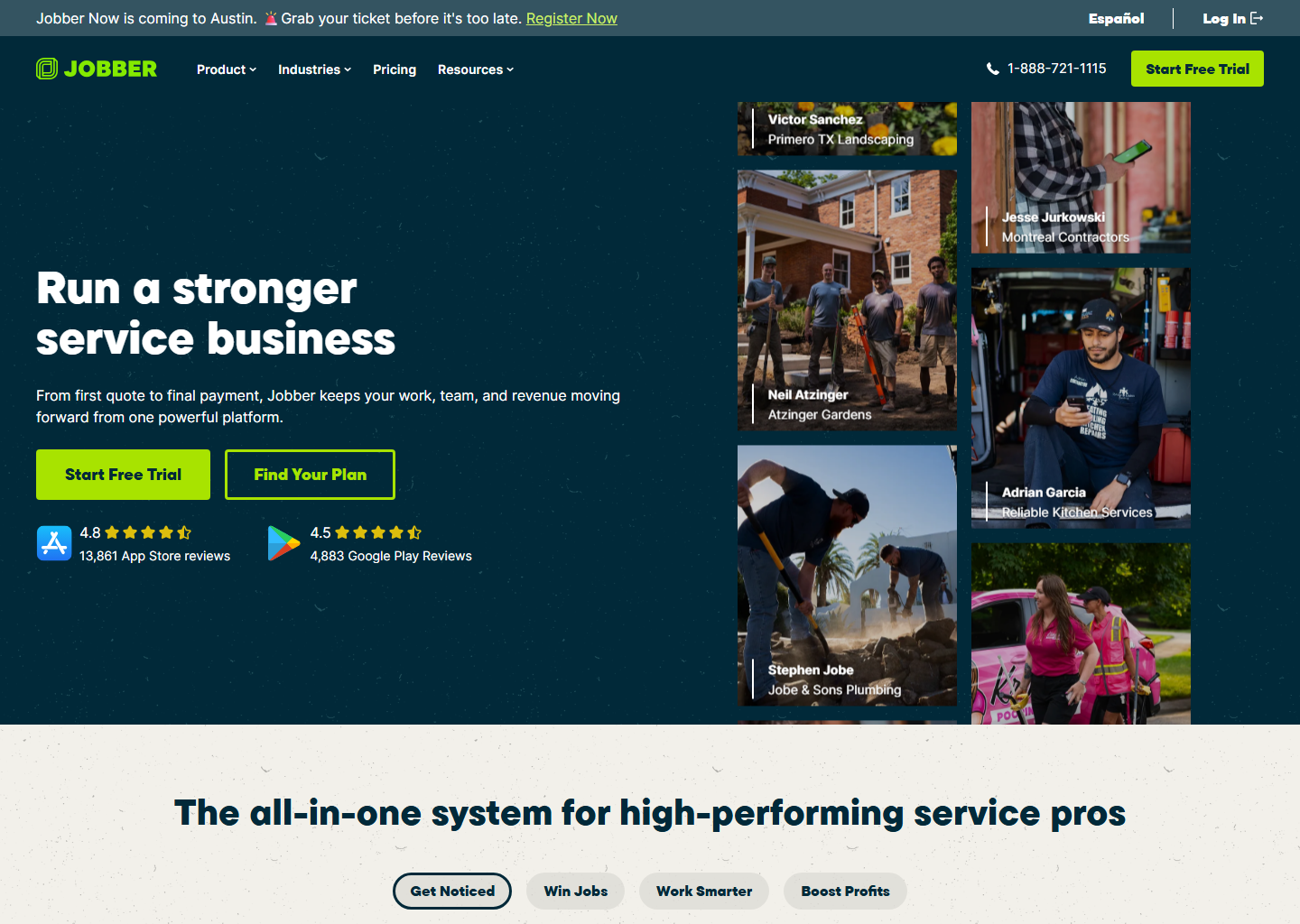
Jobber has the best quoting in the category and it's the right pick for most electrical shops, but the feature that actually wins work, optional line items, is on the Grow plan at $149/mo, not the $29 on the advert. Housecall Pro matches that $149 on Essentials with five seats included, and adds flat-rate pricing from a price book, which suits service-call work better than project work. ServiceTitan is for commercial electrical contractors billing in stages.
The estimate that gets signed
Jobber’s quoting is genuinely the strongest here, and the reason is one feature: optional line items. You quote the panel upgrade, then offer surge protection, a dedicated circuit for the garage and a safety inspection as options the customer ticks on their phone. The total updates as they choose, and you can pre-select the ones you’d recommend.
That isn’t upselling in the uncomfortable sense. It’s the stuff you’d have mentioned at the door and then forgotten to write down. Jobber also drafts estimates from your past jobs with AI, attaches photos of previous work, and chases the quote automatically when the customer goes quiet. On a trade where the average job is a four-figure decision made by comparison, that’s the difference between platforms.
The catch is the tier. Optional line items are a Grow feature, listed under Grow on Jobber’s own pricing page at $199/mo, or $149 billed annually. Core at $29 gives you a perfectly good quote: a single number, take it or leave it. If option-based quoting is the reason you’re choosing Jobber, your price is $149, and it’s better to plan for that than to discover it in week two of the trial.
The other model: flat-rate at the door
Not all electrical work is a project. Half of it is service calls: a dead outlet, a tripping breaker, a fixture swap. You’re pricing at the door and the customer wants a number now.
That’s where Housecall Pro’s flat-rate pricing earns its keep: a price book you build once, so the technician quotes from a list instead of doing arithmetic on a doorstep. It arrives on Essentials, $149/mo, which also includes the QuickBooks sync and five user seats. For a shop with three or four electricians, that seat count makes Essentials materially better value than it looks sitting next to Jobber’s $149 for one user plus $29 for everyone else.
Rough shape at four people, billed annually: Jobber Grow is $149 plus three seats at $29 = $236/mo; Housecall Pro Essentials is $149/mo. That reverses the usual “Jobber is cheaper” conclusion, and it’s why entry prices are a poor guide for this trade.
The big-ticket jobs
EV chargers, panel upgrades and whole-home rewires are the growth work, and each one is a real financial decision for a household, which is why all three platforms offer consumer financing. Jobber and Housecall Pro use the same lender, Wisetack, so financing is not a reason to pick one over the other. Housecall Pro publishes the terms: $500 to $65,000, up to 120 months, 0–35.9% APR, a flat 3.9% merchant fee per transaction, and it’s included on every plan. Jobber offers the same integration without publishing figures.
For work running longer than a day, both do progress invoicing: Jobber as a milestone payment schedule, Housecall Pro by percentage or fixed amount. ServiceTitan is the only one producing AIA-standard applications for payment with retainage, which is decisive if you subcontract on commercial jobs and irrelevant if you don’t.
What none of them handle
Two gaps worth naming, because no vendor volunteers them:
- Permits and inspections. ServiceTitan is the only one that publishes a method, and it’s worth reading before you assume the others match it: its help centre article Stay Compliant with Permits & Regulations walks you through custom fields for permit number, permit status (Application Submitted → Approved → Inspection Scheduled → Inspection Passed) and inspection date, plus dispatch-board tags. Read the caveat in the same document, though. ServiceTitan says permit status “must be managed manually” and that “there is no automatic gate that prevents a technician from starting work on a job without a permit.” So it’s a documented recipe, not a permit module. Housecall Pro’s own answer is a downloadable spreadsheet template. For Jobber, it’s custom fields or a third-party app.
- Licence and certification records. ServiceTitan documents this too, again as custom fields on the technician (licence number, type, issuing authority and expiration date), with a suggested 30/60/90-day expiry report. And again it says the quiet part itself: it “does not have a native certification tracking module with built-in expiration alerts.” If renewals slipping through is your worry, that sentence is the one to weigh.
If a salesperson tells you otherwise, ask to see it in the product before you sign.
At a glance
| Jobber | Housecall Pro | ServiceTitan | |
|---|---|---|---|
| Option-based quoting | ✅ Grow ($149) | ✅ Proposals | ✅ Multi-option |
| Flat-rate price book | ⚠️ Products list, built by you | ✅ Essentials ($149) | ✅ |
| Seats included | 1 (+$29 each) | 1 / 5 / 8 by tier | Per technician |
| QuickBooks sync | Connect ($99) | Essentials ($149) | ✅ |
| Consumer financing | ✅ Wisetack | ✅ Wisetack, all plans | ✅ |
| Permits / inspections | ❌ | ❌ | ⚠️ Documented recipe: custom fields + tags |
| Realistic price | $149/mo (Grow) | $149/mo (5 seats) | Quote only |
Who should pick which
- Solo electrician, project-heavy: Jobber Grow, $149/mo. The option-based quote justifies the tier on its own if you bid regularly.
- Solo, mostly small service calls: Jobber Core at $29 is genuinely enough. Quote, schedule, invoice, get paid. Upgrade when you start losing bids you should have won.
- Three or more electricians: Housecall Pro Essentials, $149/mo. Five seats, flat-rate pricing and QuickBooks in one number.
- Commercial subcontracting with retainage: ServiceTitan. Our ServiceTitan review has the test for whether you’re there yet.
Quick questions people always ask
What’s the best software for a solo electrician? Jobber. Core at $29/mo billed annually covers quoting, scheduling, invoicing and payments. If you want the good-better-best quote with tickable options, that’s the Grow plan at $149. Decide which you actually need before you buy.
Which plan has option-based quotes? Jobber’s optional line items are a Grow feature, listed as such on its own pricing page. Housecall Pro handles options through proposals; its sales proposal tool is $40/mo on Basic and Essentials and included on MAX.
Can customers finance a panel upgrade or EV charger? Yes, on all three. Jobber and Housecall Pro both run it through Wisetack, the same lender, so it isn’t a tiebreaker. Terms published by Housecall Pro: $500–$65,000, up to 120 months, 0–35.9% APR.
Does any of them track permits and inspections? Not as a dedicated feature, but don’t treat them as equal here. ServiceTitan publishes a permit and inspection workflow in its help centre, assembled from custom fields (permit number, permit status and inspection date, plus milestone tasks), and it states plainly that nothing stops a job starting without a permit. Housecall Pro’s official answer is a spreadsheet template you download. Jobber leaves it to custom fields or a third-party permit app.
Is Housecall Pro cheaper than Jobber for an electrical shop? At one user, no. At four, yes: Essentials at $149 includes five seats, while Jobber Grow at $149 includes one and charges $29 for each extra. Compare at your headcount.
Bottom line
Electrical is won at the quote, so buy the quote. Jobber Grow at $149/mo is the best estimating experience in this category and the plan the feature actually lives on, not the $29 entry price. Housecall Pro Essentials, also $149, is the better deal from about three electricians upward and the stronger choice if your work is service calls priced from a flat-rate book. Whichever you pick, don’t expect permits to move off your spreadsheet by themselves. ServiceTitan is the only one that documents a way to bring them in, and even it says the tracking stays manual.
Go deeper: Housecall Pro vs Jobber · Jobber pricing · the pricing tracker.
Pricing verified on the vendors’ own sites on 29 July 2026. Some links are affiliate links — see our affiliate disclosure. Screenshots belong to their respective owners.